
Product Designer & Research Contractor
UX Design, Data Visualization, User research, User Interview, User Flow, Persona, Figma, Prototyping
7 months

Problem: MTTR was hindered by reliance on tribal knowledge and unstructured runbook access, with useful information often gated informally by certain teams.
Objective: To streamline MTTR by making high-quality, relevant runbooks accessible and shareable across teams through a clear and organized dashboard.
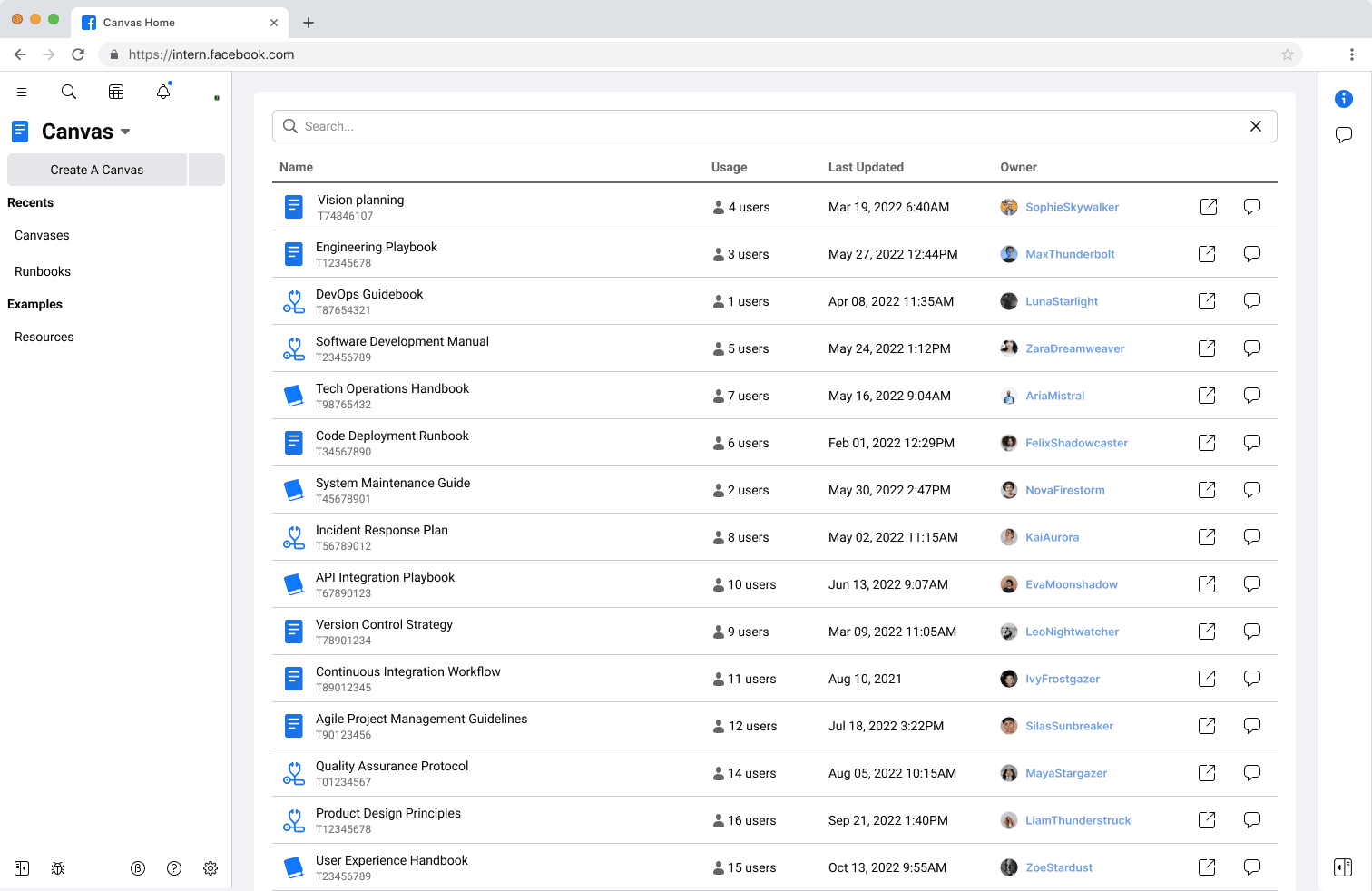
Analyze the Current Canvas Homepage
The existing Canvas homepage was primarily a search page showing only the most recently accessed runbooks, lacking curated content or relevance-based display.
Goal: Enhance the homepage by surfacing and pinning the most helpful runbooks for each team to improve accessibility and reduce search friction.
User Research and Gather Insights
Engaged with engineers to understand what makes a runbook valuable and effective, documenting feedback on critical attributes such as effectiveness, usage frequency, relevance, and versatility.
Key Evaluation Criteria: Engineers emphasized questions like "Is the runbook improving MTTR?", "Is it still relevant?", "How often is it used?", and "Where else is it referenced?"
Define Design Goals and Structure for the Runbook Dashboard
Design Goals: Develop a dual-purpose layout that enables efficient runbook consumption as both a high-level dashboard and a detailed document. Allow customization while protecting the original runbook version, ensuring only the creating team can edit the source content.
Hierarchical Layout: Organize each runbook page with a TLDR section at the top to provide quick context, followed by high-value information such as usage metrics, relevance indicators, and who has created copies, with more granular details available as users scroll down. Structure the homepage to showcase pinned runbooks by category, surfacing the most useful resources for each team and reducing reliance on search.
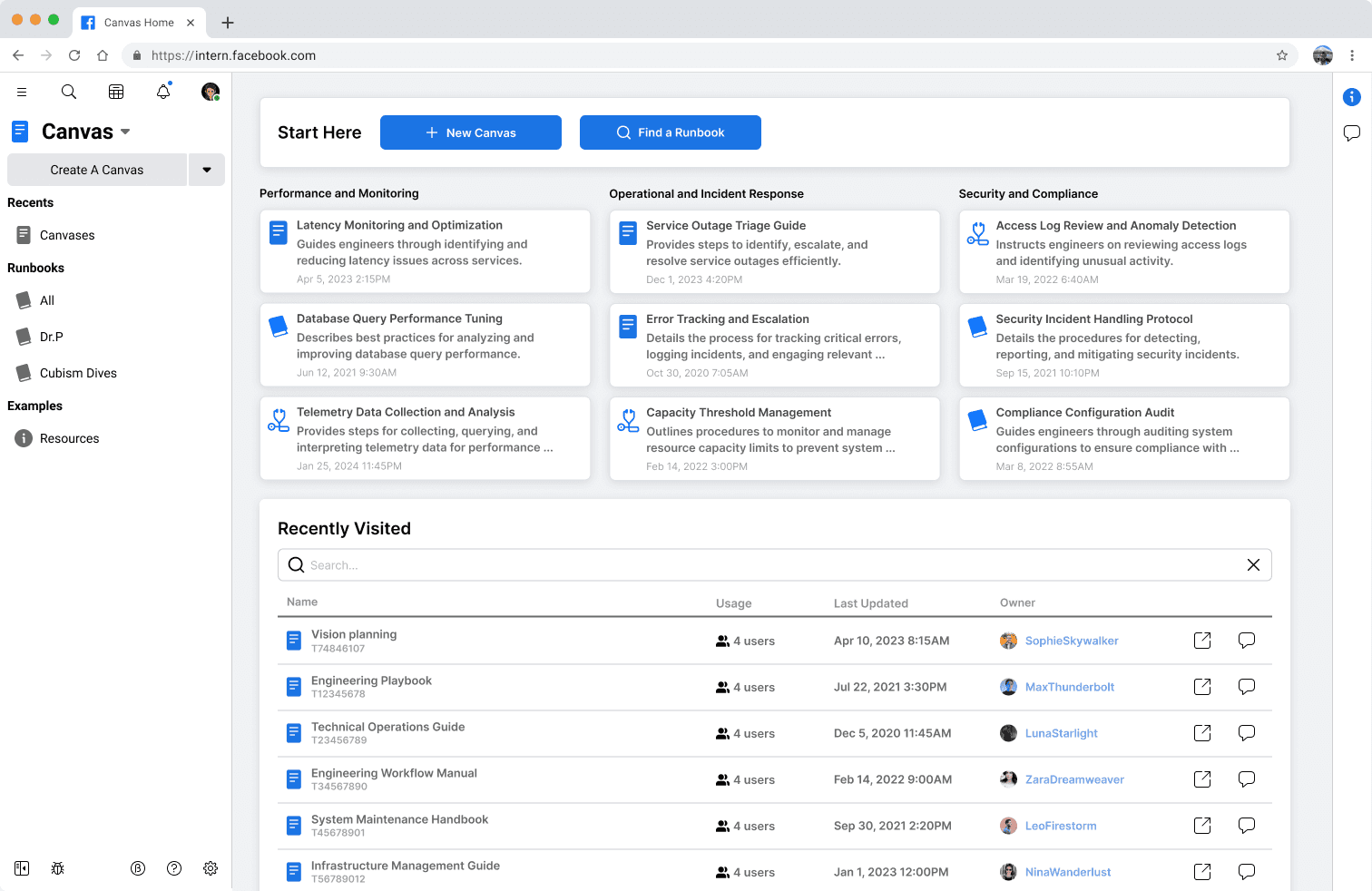
Refine the Balance of Information
Avoid overwhelming users by focusing on data relevance, curating key metrics and indicators that help users make data-driven decisions on updates or terminations.
Included clear, trackable data to replace gut-based decisions on runbook status and relevancy, supporting cost-saving objectives across the organization.
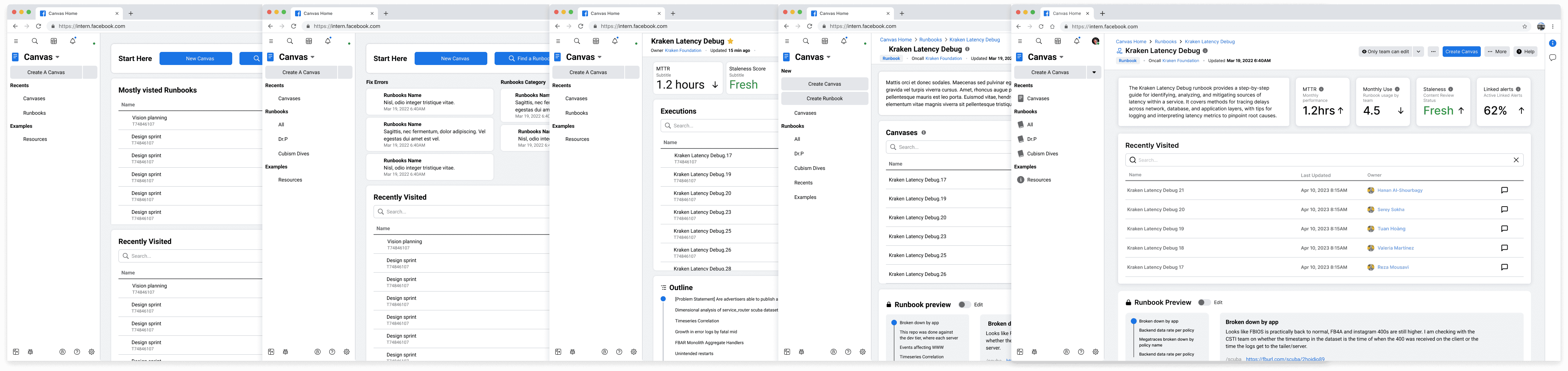
Iterate and Test for Usability and Value
Tested the design with users to ensure it provided clarity without excessive information, streamlined runbook usage tracking, and allowed quick decision-making based on data. Integrated user feedback to refine the interface and ensure it met the needs for both high-level insights and detailed exploration.